


Purchase automated vacuum bridges from Whystler Automation
An automated system – two versions for the beverage industry

Single-track and mass vacuum bridges for can coding or ejection
The Whystler vacuum bridges are easy to operate and offer high flexibility. Format settings are made in seconds, either semi-automatically via a handwheel or fully automatically with a stepper motor for all universal can diameters, can heights and materials (aluminum, steel and plastic).
One of Whystler’s USPs in terms of sustainability is the retrofit of existing systems. Upgrading avoids the costly purchase of a new VTU and also increases efficiency. Feel free to contact us about this or visit Service & Retrofit.
Our two variants of the vacuum bridge (VTU) at a glance
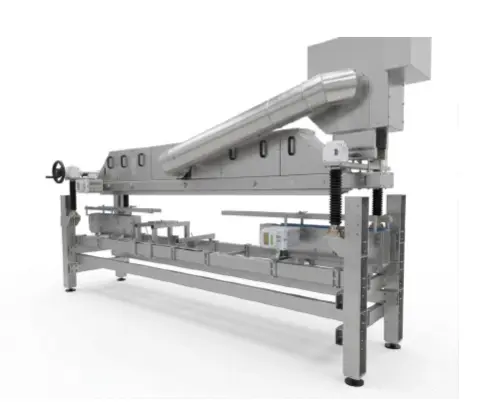
Single Spore Vacuum Bridge (VTU)
The single-lane vacuum bridge from Whystler Automation is designed for fully automated empty can coding, laser/inkjet coding (Data Matrix code or barcode), and camera inspection (track & trace) using a vacuum blower. Depending on the coding method, the single-lane VTU can be supplied with or without a laser enclosure, enabling complete traceability. Advantages of the single-lane vacuum bridge include high energy efficiency and easy replacement of the coarse and fine filter units via a removable housing cover. The filters can be changed after releasing the quick-release fasteners. The closed system of the vacuum blower also guarantees reduced noise levels, minimal vibration, and easy access for maintenance via a large service door.
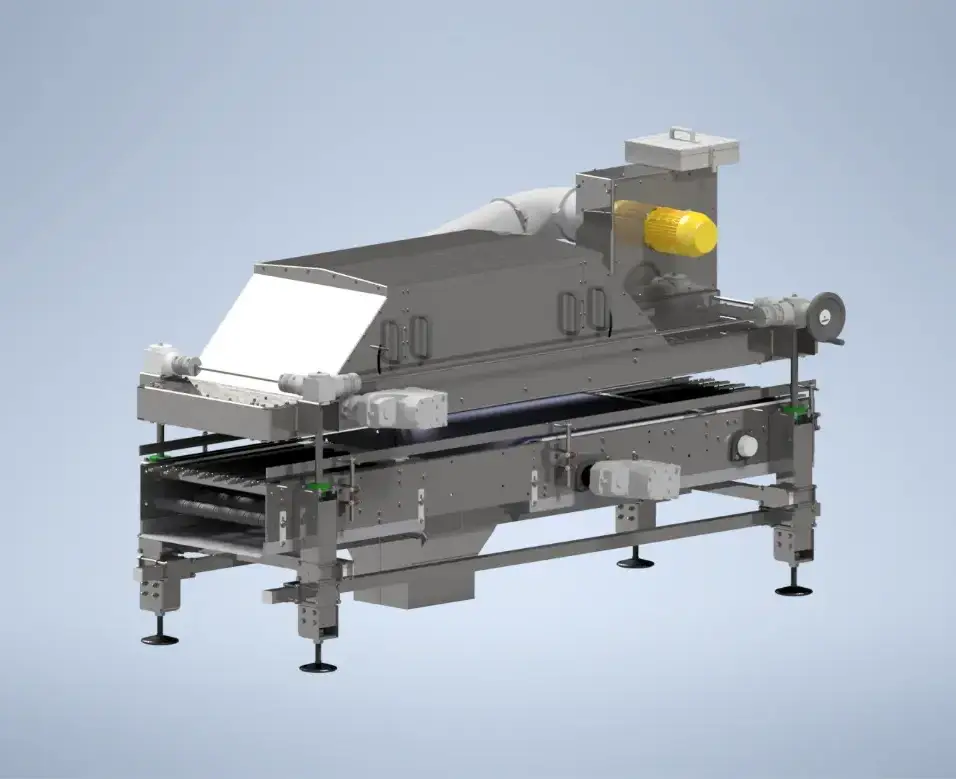
Mass Vacuum Bridge
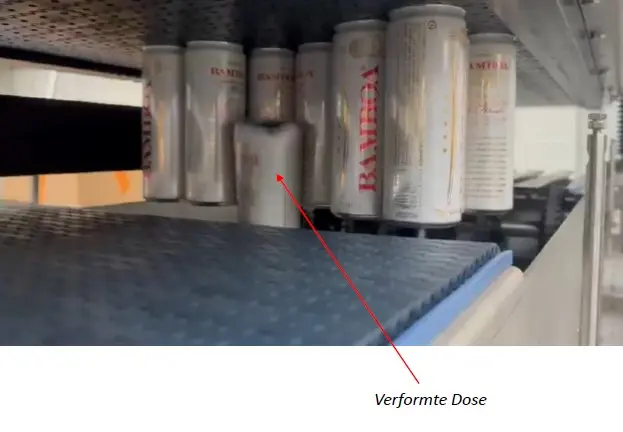
The Mass Vacuum Transfer Unit (VTU) is a fully automated multi-lane transfer system available in 4-, 6-, 8-, or 10-lane configurations. This multi-lane vacuum transfer unit is suitable for handling fallen, lying, or deformed empty cans. These cans are removed from the process via a can chute or a side-mounted drop chute. Each of these vacuum transfer units can be individually customized to meet customer requirements. It offers significant efficiency gains because the removal of deformed cans prevents system stoppages and congestion, resulting in increased overall system availability.
Do you want to know how a fully automated vacuum bridge (VTU) can be integrated into your production line?
Contact us directly! Together we will develop a suitable solution for you.
The advantages of Whystler’s automated Vacuum Bridges
Easy to use
Higher line efficiency
Avoiding stops due to Deformed Cans
Great Flexibility
No Changeover Times
Precise Positioning
Modular Task
Stepless Height Adjustment
Many Years of Experience
The advantages of Whystler’s automated Vacuum Bridges
Easy to use
Higher line efficiency
Avoiding stops due to Deformed Cans
Great Flexibility
No Changeover Times
Precise Positioning
Modular Task
Stepless Height Adjustment
Many Years of Experience
Technische Details der Vakuumbrücke
| Single-lane Vacuum Bridge | Mass Vacuum Bridge |
|---|---|
| Design: Single-lane infeed | Design: 4-, 6-, 8- and 10-lane conveyor |
| Height adjustment: semi-automated via handwheel or fully automatic with stepper motor | Features: continuous mat chain with vacuum holes, automatic chain tensioner and indicators for consistent performance and easy maintenance |
| Material: Stainless steel | Height adjustment: semi-automated via handwheel or fully automatic with stepper motor |
| Output: 90,000 doses per hour | Material: stainless steel |
| Can diameter: 53 to 66 mm (optional: 84 mm) | Output: 144,000 doses per hour |
| Can height: 88 to 188 mm (optional: 205 mm) | Can diameter: 53 to 66 mm (optional: 84 mm) |
| Volume: 0.15 l to 1.0 l (larger volumes available on request) | Can height: 88 to 188 mm (optional: 205 mm) |
| Can material: Aluminum, steel and plastic | Volume: 0.15 l to 1.0 l (larger volumes available on request) |
| Operator side: selectable right or left | Can material: Aluminum, steel and plastic |
| Filter unit: coarse filter G4/F5 | Monitoring: integrated chain tension indicator on the operator side |
| Filter change: Removable housing covers with quick-release fasteners | Filter unit: coarse filter G4/F5 |
| - | Filter change: Simplified by a removable housing cover with quick-release fastener |
| - | Exhaust air disposal: On the non-operating side |
| - | Infeed and outfeed conveyors: mat chains |
| - | Belt drives: inlet and outlet side |
Optional extensions for the Vacuum Bridges
- With or without a carrier
- Srvomotorized height adjustment
- Sensors for altitude detection
- Chute
- Collection container
- Electrical control
FAQs – Vacuum Bridge (VTU)
What is a Whystler vacuum bridge (VTU) and when is it used?
Here, a distinction must be made between a single-lane and a multi-lane vacuum bridge.
A single-lane vacuum bridge is a fully automated system used for empty can coding, laser coding, and camera inspection.
An automated multi-lane vacuum bridge from Whystler Automation is a transfer system that sorts out empty or severely deformed cans from the production process.
Typically, both single- and multi-lane vacuum bridges are installed in high-performance lines: first, a multi-lane vacuum bridge for removing damaged cans, and then one or two single-lane vacuum bridges for coding the cans.
What advantages does an automated vacuum bridge offer compared to conventional conveyor systems?
Compared to mechanical conveying solutions, the automated Whystler vacuum bridge enables exceptionally stable and tilt-proof transport – even at high speeds and with lightweight containers such as cans.
Key advantages, particularly relevant for high-performance filling lines:
• No tipping or tilting of cans
• Compact design for limited space
• High conveying speeds possible
• Low maintenance
For which containers and formats is a Whystler Vacuum Bridge suitable?
Vacuum bridges from Whystler Automation are specifically designed for lightweight, open containers such as aluminum, steel, or plastic cans. All can formats can be processed without format parts and with short changeover times. A small practical example: The highest number of different formats processed per machine in a single line was 12.
How can a Whystler Vacuum Bridge be integrated into existing filling lines?
Vacuum bridges are individually adapted to the specific conditions of the existing line – both in terms of infeed and outfeed heights, as well as available space and line layout. Whystler Automation offers vacuum bridges in various levels of automation.
Integration advantages:
• Adaptation to existing machine conveyor height
• Flexible line layout
• Integration into existing control systems / line control possible
• Vacuum bridges are ideal for automating existing systems (retrofit) to increase efficiency or for expanding existing lines.
How economical is the use of an automated Whystler vacuum bridge?
Thanks to its stable transport and high process reliability, the automated vacuum bridge significantly contributes to increasing the efficiency of the entire beverage production line.
Economic advantages:
• Reduced downtime and scrap
• Consistent production output
• Low maintenance and operating costs
Would you like to know more about the product solution and individual customization options?
We will then contact you promptly and arrange an appointment.
Your Whystler Automation team